Speaker and press kit
Everything a programme, an introduction or an article needs. Bios may be used and shortened as needed. Every fact here is listed with its sources: see Sources.
Bios
One line
Adam Dąbrowski is CTO of Robotec.ai in Warsaw. He proposed the ROS Simulation Interfaces, is lead author of REP 158, OpenUSD conventions for robot simulation assets, and created Slingshot, Robotec.ai's scan-to-digital-twin product.
Short (about 80 words)
Adam Dąbrowski is CTO of Robotec.ai in Warsaw, where he leads engineering for robot simulation and physical AI. He proposed the ROS Simulation Interfaces, now implemented in Gazebo, NVIDIA Isaac Sim and O3DE, and is lead author of REP 158, OpenUSD conventions for robot simulation assets. Among Robotec.ai's first five people, he has led its technology through its bootstrapped growth to 50 people. In 2026 he conceived Slingshot, the company's scan-to-digital-twin product, and wrote most of it. He first spoke at ROSCon in 2016.
Long (about 350 words)
Adam Dąbrowski is CTO of Robotec.ai in Warsaw. He works on the engineering that takes foundation models from demos to dependable operation on real robots, the theme of his 2026 Davos Tech Summit keynote, The Blueprint for Physical AI. He was among the first five people at Robotec.ai and has led its technology through its bootstrapped growth to 50 people.
He has written software since 2005. Before robotics he developed clients for Gadu-Gadu, then Poland's most-used instant messenger, worked as a system analyst on integrating information systems at PZU, Poland's largest insurer, and worked on a risk-rating system for Poland's largest bank at Deloitte. In 2014 he moved to robotics at PIAP, the Industrial Research Institute for Automation and Measurements. There he led the Autonomy group and PIAP's part in two EU projects: OFERA, which produced micro-ROS (ROS 2 for microcontrollers), and R5-COP, a 30-partner project on modular, ROS-based robots, whose exhibit won the ARTEMIS Exhibition Award in 2015.
At Robotec.ai since its founding in 2019, and at its predecessor Robocar from 2017, he has been technical lead, principal engineer, VP Robotics & Simulation and, since 2024, CTO. He co-created ROS 2 for Unity, which ships inside AWSIM, an open-source driving simulator for Autoware, started the ROS 2 integration of Open 3D Engine, improved rosbag2 recording performance, and conceived RAI, an open-source agent framework for embodied AI. He proposed the ROS Simulation Interfaces, implemented in Gazebo, NVIDIA Isaac Sim and O3DE, and is lead author of REP 158, OpenUSD conventions for robot simulation assets. In 2026 he conceived, designed and wrote most of Slingshot, Robotec.ai's product that turns a site scan into a simulation-ready digital twin.
He was Chair of O3DE SIG-Simulation (elected 2023), leads the ROS Embodied AI Community Group he founded in 2024, was an initial member of the Open Source Robotics Alliance's Physical AI SIG, leads the Simulations & Standards working group of the COST Action Agentic Physical AI (API-Net), and has been an Independent Expert Evaluator for the European Commission since 2018. He holds an MSc in Information Technology from the University of Warsaw.
Name and title
- Name
- Adam Dąbrowski (also written Adam Dabrowski)
- Pronunciation
- AH-dahm dom-BROF-skee
- Title
- CTO, Robotec.ai
- Based in
- Warsaw, Poland
- Languages
- Polish (native), English, German
- Photo
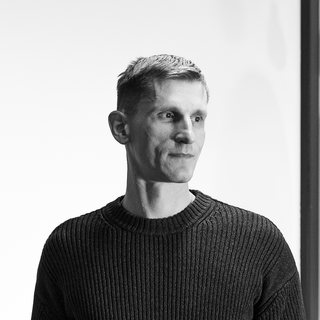
Headshot, square (800 px) · Portrait at Robotec.ai (2000 px) · Colour, at the Davos Tech Summit 2026 · At the Davos Tech Summit 2026, Alps
Photos: Adam Kutyłowski, Robotec.ai (black and white); Davos Tech Summit (colour)
Talk topics
- The Blueprint for Physical AI: engineering to deploy foundation models. Why demos at 90% are not industry at 99.9%, and the four steps that close the gap. Keynote, executive audience.
- Simulation as the test bench for robot operations. OpenUSD, REP 158 and the ROS Simulation Interfaces: one interface across simulators, and assets that move between them. Technical.
- Agents on robots. Modular skills and zero-trust safety, “safe even with the dumbest AI in charge”, with the open-source RAI framework. Technical.
- How an idea becomes a robotics standard. From a proposal to implementations by competing simulators: what it takes, and what to hand over. Community and open source.
Formats: keynote, talk, panel, hands-on workshop.
Talks, workshops and interviews
| Date | Event | Title |
|---|---|---|
| Sep 2026 | ROSCon, Toronto | workshopTrain, Simulate, Deploy: Agentic AI from Cloud to Robot, co-presenter |
| Jul 2026 | Davos Tech Summit | keynoteThe Blueprint for Physical AI, main stage, session Foundation Models in Robotics (not recorded; slides and a written record) |
| Oct 2025 | ROSCon, Singapore | talkIntroducing the new ROS simulation standard (video), with Ayush Ghosh (NVIDIA) |
| Oct 2024 | ROSCon, Odense | talkAgent-based AI Framework for ROS 2 (video), slides, and the Embodied AI Birds of a Feather session |
| Oct 2024 | Warsaw.ai, Episode XXIV | talkAI Agent framework for robotics |
| Nov 2023 | ROS Developers Podcast | podcast#128: O3DE robotics simulator |
| Oct 2023 | Gazebo community meeting | talkOpen 3D Engine for ROS simulations |
| Oct 2023 | ROSCon, New Orleans | talkSimulate robots like never before with Open 3D Engine (video), slides |
| 2023 | Open 3D Foundation webinar | panelHow Open Source Technologies are Accelerating Robotic Innovation |
| Oct 2022 | ROSCon, Kyoto | demoApple-picking robots in O3DE |
| Oct 2021 | ROS World | talkRosbag2 for Power Users (video), with Emerson Knapp |
| Jul 2020 | ROS Tooling Working Group | sessionrosbag2 performance findings (recording) |
| Oct 2016 | ROSCon, Seoul | talkEvaluating the resilience of ROS2 communication layer (video), with Rafał Kozik and Mateusz Maciaś (PIAP) |
| Oct 2016 | ARTEMIS Technology Conference, Madrid | workshopR5-COP project workshop: opened it with the project overview, and gave two technical talks, Modular approach to robot control and Advanced and experimental human-machine interfaces (agenda) |
Quotes
“AI doesn't have to do everything to be useful.”
“A system must be safe even with the dumbest AI in charge.”
“Today's demos deliver about 90%. The industry runs at 99.9%. The missing 10% is not a rounding error. It is a stopped supply chain, a broken machine, an injured worker.”
From The Blueprint for Physical AI, Davos Tech Summit, July 2026.
Contact
Invitations, interviews and photos: message Adam on LinkedIn. He welcomes messages about social-good initiatives.